MEDEA
Guest performance as part of ArtOrt'22 – Urban Paradise
Autohaus/ArtOrt´22 (neben der Hebelhalle)
- SCHOLA HEIDELBERG | ensemble aisthesis
Leitung: Ekkehard Windrich
Veranstalter: UnterwegsTheater Heidelberg in Kooperation mit dem KlangForum Heidelberg
Works by Iannis Xenakis, Franz Schubert, Juliana Hodkinson, Bernd Alois Zimmermann, and Gérard Grisey.
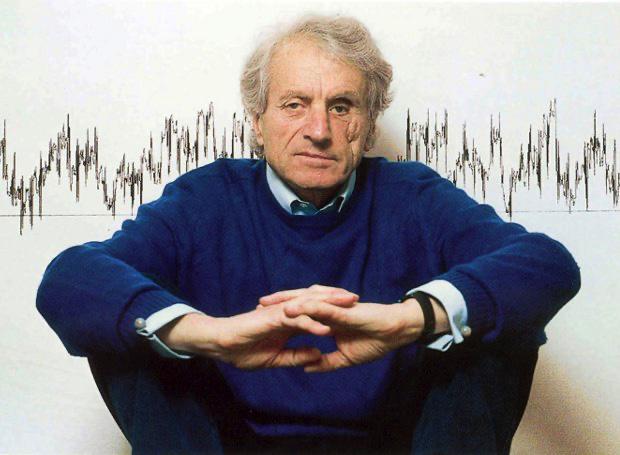
With his Medea senecae, Iannis Xenakis takes an extreme position that can probably only be conveyed today in a thoughtful concert program and with knowledge of his biography. Xenakis, who would have celebrated his 100th birthday on May 29, 2022, is generally considered one of the most significant musical pioneers of the 20th century. That he probably also saw himself as a front-line fighter determined to go to the extreme is hardly surprising: In the Second World War, Xenakis joined the armed Greek resistance against the Italian-German occupiers. When Churchill reinstated the Greek monarchy in 1944, Xenakis continued to fight in the Greek Civil War, on the side of the communists. In the process, he suffered severe injuries from British tank fire, which he barely survived. In 1947, he fled to Paris to escape the anti-communist waves of arrests, where, despite his status as an illegal refugee sentenced to death in his homeland, he managed to get a job as a structural engineer with Le Corbusier.
Medea seneca reflects much of this self-understanding. The Medea material undergoes a shift in meaning with Seneca compared to Euripides, thru which Jason's motives for action become understandable. Seneca's choral odes also praise Jason's immense contributions to civilizational progress. Xenakis now exclusively sets those choral songs to music, while Medea herself does not get a word in. The piece closes, on the contrary, with the choir's fiery appeal to spare Jason from further punishment. Even tho heroic male images are currently experiencing a rather questionable renaissance, this Medea conception must seem very archaic to us today – just as Xenakis' music does in its boldness and brutal modernity.
Reason enough to continue exploring Medea and male images in our transformation concert at the former car dealership – what a place for traditional gender roles! Medea herself is heard with her bubbling monologs, as well as Bernd Alois Zimmermann's four-channel tape piece Tratto II, which was to become part of his unfinished Medea grand project. The male choirs of Franz Schubert, by contrast, convey a sensitive, unheroic perspective full of doubt and despair. Juliana Hodkinson, on the other hand, lets all self-assured positions fray in (something in capitals): with a great sense of the unfolding of sound sources in space, she gently merges fragments of sentences, words, and obscure noises. The final point is Gérard Grisey's Stèle for two large drums. Originally composed for a deceased friend, the work serves as a silent memorial in the context of this concert for the seemingly distant conflicts that culminate in Medea.