„ÜBER“ - Ensemble hand werk
Biennale for New Music Rhein-Neckar hosted by BASF
BASF-Gesellschaftshaus
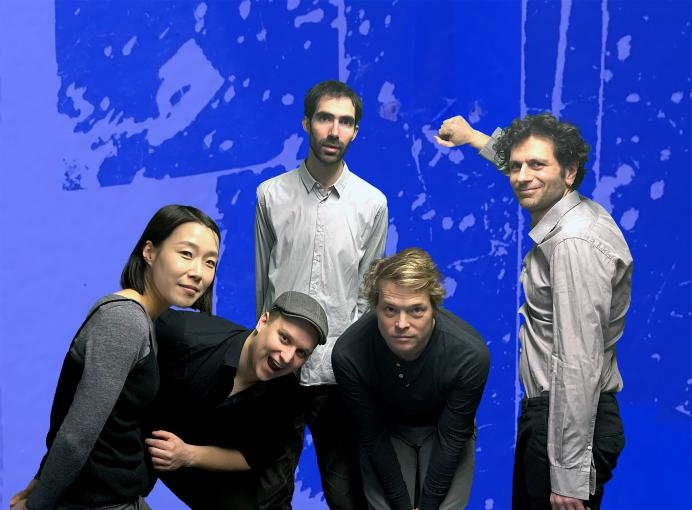
- hand werk
Veranstalter: BASF
hand work
Daniel Agi, flute
Heni Hyunjung Kim, clarinet
Niklas Seidl, cello
Program: "ÜBER" ("ABOUT")
Vladimir Gorlinksy: "Bramputapsel #2" (2011)
Simon Steen-Andersen: "In the Noise 1: In the Noise" (2012)
Jonas Baes: "forArlyn" (2020)
Natacha Diels: "2.5 nightmares" (2015)
Simon Steen-Andersen: "In the Noise 3: Into Oneself" (2012)
Lisa Streich: "ASHES" (2012)
Francesco Filidei: "The Funeral of the Anarchist Serantini"
The ensemble "hand werk," since its founding in 2011 in Cologne, has stood for sustainability and recycling as well as the highest artistic standards in the field of contemporary chamber music. In doing so, the ensemble is particularly dedicated to developing and performing works that, after their world premiere, have unjustly fallen into oblivion and certainly have the potential for a revival. In its artistic work, hand werk reflects on the guiding principle of traditional craftsmanship, where, instead of profit optimization, the creation process, alongside care and quality, takes center stage. Thru this focus, hand werk makes a crucial contribution to the long-term cultivation of contemporary music, thereby establishing a connection between progressiveness and consistency. ÜBER places music above music at the center of attention.
The piece "ASHES" lives from "O Haupt voll Blut und Wunden," writes Lisa Streich about her duo. It runs thru the entire work, inaudibly, until it is quoted at the end, screaming in the highest register of the clarinet.
In "forArlyn" by Jonas Baes, the question of how to "hear the old thru the new" takes on a socio-political dimension, also referencing the composer's Filipino homeland and the phenomenon of globalization. "ForArlyn" is structured as a suite, and allows the baroque form as well as the dance gestures to shine thru the noisy surface of the work again and again.
Simon Steen-Andersen has arranged songs by Robert Schumann for his cycle "Im Rauschen." In doing so, he did not interfere with the pitches and only very little with the rhythm of the originals. The nonetheless remarkable alienation effect arises from the fact that the pitches are made audible solely thru the filtering of electronic signals using the flute, clarinet, and mouth cavity.
Vladimir Gorlinsky processes material from various improvisations in his complex and wild "Bramputapsel" #2. Finally, "2.5 Nightmares" and "I Funerali dell'Anarchico Serantini" thematize gesture as musical material. While "2.5 Nightmares" examines the various relationships between musical and physical gesture, Francesco Filidei puts the gesture in the service of a program. In "The Funeral of the Anarchist Serantini" he describes a funeral scene that he has not witnessed, but which he is able to imagine very vividly, as the piece shows.