On Speaking and Silence – Facets of Memory: 1968 Global – A Retrospective
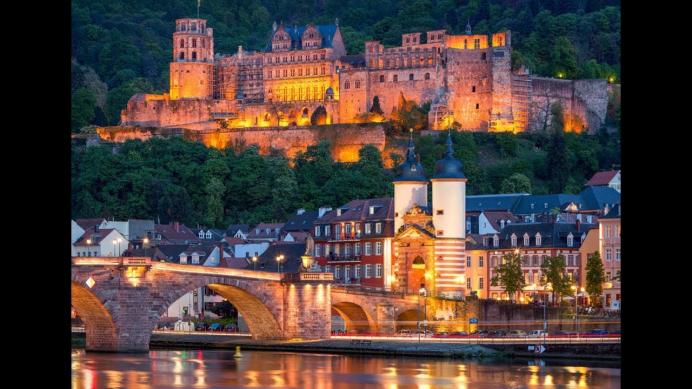
Völkerkundemuseum Heidelberg
Komposition:
- Georg Friedrich Haas: Schweigen, 2012
- Dániel Péter Biró: 1. Ex Omnibus, aus: Scholium 2 (nach Sätzen aus "Ethica" von Baruch de Spinoza), 2018
- Dániel Péter Biró: 2. Expedientin vaga, aus: Scholium 2 (nach Sätzen aus "Ethica" von Baruch de Spinoza), 2018
- Morton Feldman: Intermission I, for piano, 1950
- Dániel Péter Biró: 3. Ex Singularibus, aus: Scholium 2 (nach Sätzen aus "Ethica" von Baruch de Spinoza)
- Morton Feldman: Intermission II, for piano, 1950
- Dániel Péter Biró: 4. Ego sum qui sum, aus: Scholium 2 (nach Sätzen aus "Ethica" von Baruch de Spinoza)
- Dániel Péter Biró: 5. Ex Signis, aus: Scholium 2 (nach Sätzen aus "Ethica" von Baruch de Spinoza)
- Morton Feldman: Intermission V, für Klavier, 1952
- Dániel Péter Biró: 6. Vajomar elohim, aus: Scholium 2 (nach Sätzen aus "Ethica" von Baruch de Spinoza)
- SCHOLA HEIDELBERG | ensemble aisthesis
Leitung: Walter Nußbaum
Veranstalter: Universität Heidelberg
Remembering the past always means perceiving it selectively, retaining certain experiences while suppressing others – whether consciously or unconsciously.
The concert "On Speaking and Silence" explores various forms of silence and (non-)remembrance through works by Haas, Biró, and Feldman. It describes and questions the struggle for expression, speech, and understanding – in and during traumatic times. The event marks the opening of the exhibition Facets of Remembrance: 1968 Global – China and the World at the Museum of Ethnology in Heidelberg. Two Chinese artists, Ni Shaofeng and Deng Huaidong, engage with their (memory) images from the time of the Great Proletarian Cultural Revolution in China, an event that resonated in diverse ways within the global ’68 movement. The shifts in medium that the two artists undertake – from the photograph that serves as a template for the propaganda poster to ink and oil painting – constitute their very personal statement: Through this media translation, the all-too-familiar, indeed generic, propaganda templates are modified and thus individualized, catapulted back from the (officially strictly regulated) collective memory (where repression and amnesia reign) into the subjectively determined, communicative memory. Thus, these painterly depictions also address the question of how that which has been shrouded in silence for decades can be made to speak again.
Works by Dániel Péter Biró, Georg Friedrich Haas, and Morton Feldman.
Sponsored by the Confucius Institute and in collaboration with Heidelberg University – Centre for Asian and Transcultural Studies (CATS).
Closed Society.